
Water-Resistant Floors · Professional Installation
Waterproof Laminate Flooring Chicago
Today’s water-resistant and waterproof-labeled laminate products can offer realistic wood visuals with a durable wear surface. Performance still depends on the specific product, locked seams, perimeter details and how spills are handled.
Serving Chicagoland Since 1979 · Residential & Commercial Flooring · Licensed & Insured
A better floor starts with better planning
Today’s water-resistant and waterproof-labeled laminate products can offer realistic wood visuals with a durable wear surface. Performance still depends on the specific product, locked seams, perimeter details and how spills are handled.
CSI Carpet helps clients separate marketing language from the actual warranty. We review approved rooms, exposure limits, cleaning instructions and installation requirements before recommending a floor.
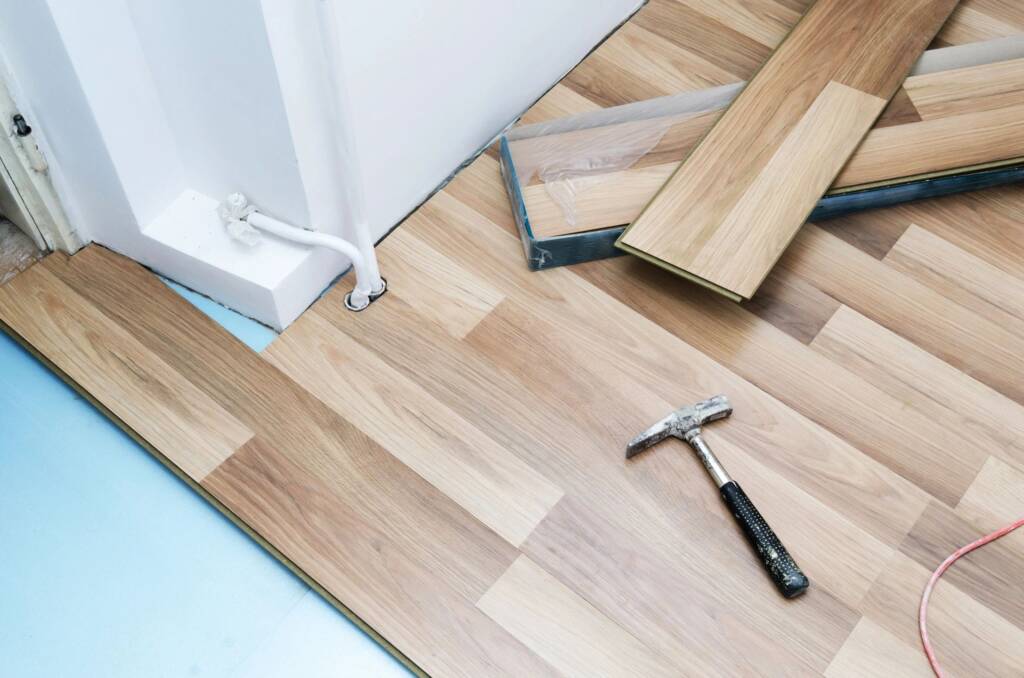
Professional layout, flatness correction and careful cuts around doorways and fixed objects help the surface look continuous and allow the floating system to move as designed.
Performance details that matter
Realistic wood visuals
Modern embossing and plank variation create a convincing finished appearance.
Durable wear surface
Laminate is designed to resist everyday scuffs and abrasion in busy household areas.
Efficient renovation
Floating installation can work well in many remodels when height, flatness and transitions are managed.
Common applications
- Living rooms, bedrooms and home offices
- Kitchens where the selected product is approved
- Entry areas and busy family spaces
- Condominiums and rental-property renovations
- Light commercial interiors within product warranty limits
The final recommendation should reflect traffic, cleaning, downtime, adjacent finishes and the building’s operating needs.
Technical considerations
- Waterproof claims vary; exposure duration and perimeter sealing requirements matter.
- Floating floors require expansion space and cannot be pinned by fixed cabinetry.
- Subfloor flatness affects joint stress, movement and sound.
- Underlayment must be compatible with the product and any association sound requirements.
A clear installation process
From the first site review to turnover, each stage supports the performance of the finished floor.
01
Evaluate
We inspect the space, existing material, substrate and access constraints.
02
Specify
Product, preparation, transitions and schedule are aligned with the room’s use.
03
Prepare
Removal, cleaning, patching and other approved preparation create a suitable surface.
04
Install
Layout, cuts, seams, edges and transitions are completed with product requirements in mind.
05
Turn over
Access timing, protection and manufacturer-based maintenance guidance are reviewed.
Planning for Chicagoland properties
Entryways need special thought during Chicago winters because tracked snow, salt and grit can stress seams and finishes. Mats, prompt cleanup and approved maintenance remain important even with waterproof-labeled products.
Our recommendations connect site conditions to material limitations, preparation and scheduling so the scope is easier to understand before work begins.
What helps us estimate
Share room dimensions, photos, the existing floor, building type and preferred timing. An on-site review may be needed to define substrate preparation accurately.
We will help you compare practical options and organize the next step.
Frequently asked questions
Is waterproof laminate completely immune to water?
No flooring should be treated as immune. Product warranties define exposure limits, installation details and exclusions.
Can laminate be installed in a basement?
Some products are approved for below-grade use over suitable substrates. Moisture and installation requirements must be checked.
How is it different from vinyl plank?
Laminate and vinyl use different core and surface constructions. Feel, sound, water tolerance and repair considerations vary.
Can it go under cabinets?
Floating laminate generally should not be trapped beneath fixed cabinets unless the manufacturer explicitly permits it.
What causes hollow sounds?
Subfloor unevenness, underlayment, room acoustics and floating-floor construction can all contribute. Proper preparation minimizes avoidable movement.
Discuss your flooring project
Get a practical recommendation based on the space, the substrate and the way the floor will be used.